Quinton Lucas Wants an NBA Team for Kansas City — and Once Again, He’s Looking the Wrong Way
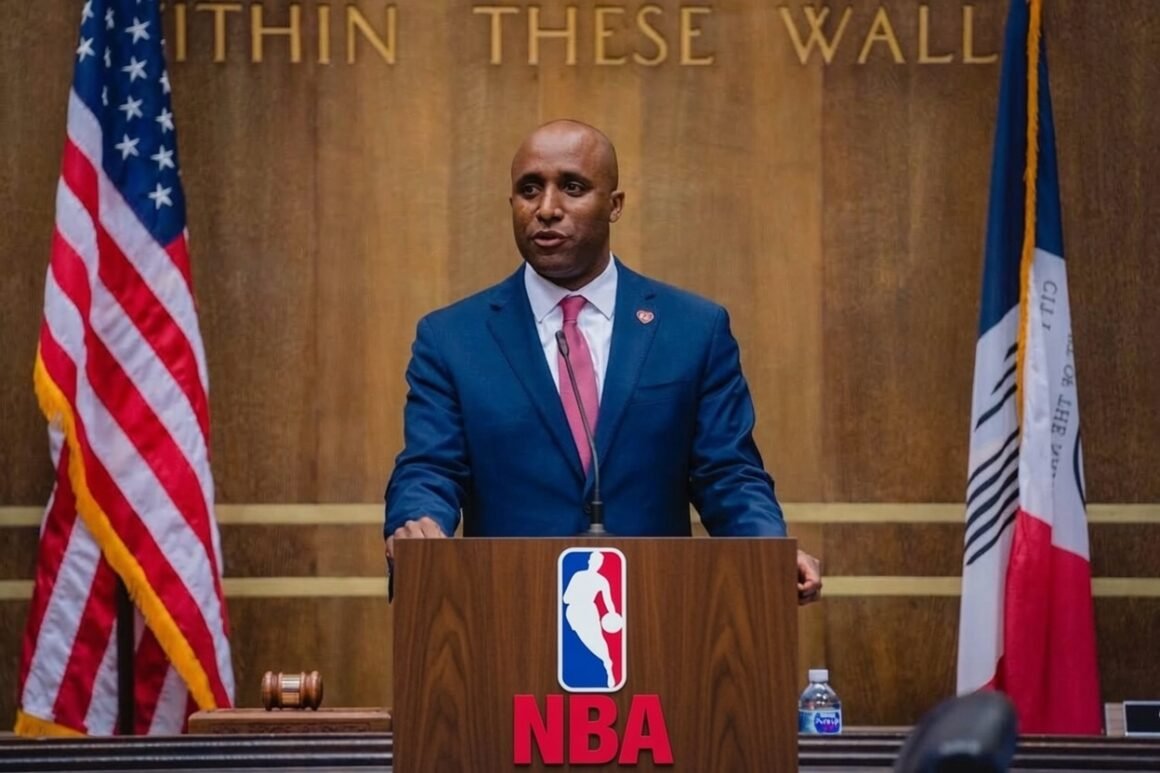
Kansas City Mayor Quinton Lucas is back on his favorite hobby horse: chasing an NBA franchise. Fresh off the World Cup spotlight, Lucas told reporters this week that the metro “could easily support an NBA team” and that Kansas City “wants to be in that conversation,” whether through expansion or a relocating franchise. He even co-signed sports commentator Bill Simmons on the idea and tagged the league itself.
It sounds exciting. It also sounds like a mayor who has spent years talking about crime, housing, and homelessness while repeatedly prioritizing downtown prestige projects and sports subsidies over the daily realities facing most Kansas Citians.
The Delusion of Priorities
Lucas ran on fixing the basics. Crime reduction. Affordable housing. Getting people off the streets. Those were the promises. Instead, Kansas City continues to wrestle with stubborn violent crime numbers, visible homelessness, and a housing market that prices out too many working families. Meanwhile, the mayor finds time to publicly audition for an NBA team.
This is not neutral economic development. It is the same pattern we have seen before: public money and political capital poured into stadium deals and downtown amenities while neighborhoods farther from the Power & Light District wait for the “spillover” that rarely arrives. An NBA push is pure downtown-crowd politics. It plays well with boosters, developers, and the young professionals who already have disposable income for tickets. It does far less for the single mother on the East Side, the small business owner dealing with property crime, or the veteran sleeping under a bridge.
Kansas City already has the Chiefs, Royals, Sporting KC, and a successful college basketball culture. Adding another professional team would be a luxury, not a necessity. A mayor focused on the necessities would spend his political capital on public safety, housing supply, and mental-health and addiction services for the homeless — not on courting billionaire owners.
Why Kansas City Lost the Kings in the First Place
Kansas City had an NBA team once. The Kansas City Kings played here from 1972 to 1985 after moving from Cincinnati. They never truly took root. Attendance was chronically low. Ownership was unstable. The 1979 Kemper Arena roof collapse forced temporary relocation to a smaller venue. College basketball — Kansas, Kansas State, Missouri — commanded far more regional loyalty and attention. By the early 1980s the team was struggling financially. In 1983 a Sacramento investor group bought the franchise for $10.5 million. After honoring the remaining lease, the Kings left for California after the 1984-85 season.
The lesson was straightforward: market size, consistent fan support, and a competitive arena matter. Kansas City in the 1980s could not sustain the franchise against stronger local alternatives and weak ownership. Those structural questions have not disappeared simply because millennials now want an NBA team.
What Are the Real Chances?
Honest assessment: low in the near term.
The NBA is currently focused on expansion to Seattle and Las Vegas, with a target start of the 2028-29 season. Those two markets sit at the front of the line. Kansas City appears on secondary lists from time to time, but it is not a priority. Relocation remains theoretically possible — teams in smaller or struggling markets occasionally look for better deals — yet no franchise is currently shopping itself to Kansas City in any public way.
Kansas City’s metro population and television market rank it as a mid-tier candidate at best. The city has proven it can support major sports, but the NBA is selective. Without a committed ownership group willing to write a multi-billion-dollar check and a modern arena plan that does not lean heavily on public subsidies, the conversation stays aspirational.
Economic Boost or Strain?
An NBA team brings real short-term tourism dollars, especially if the club makes the playoffs. Host cities for deep playoff runs and Finals games have seen direct economic impacts in the $25 million range for the Finals alone, with total activity (including indirect spending) climbing higher — one frequently cited series generated roughly $57 million. Hotels, restaurants, bars, and rideshares benefit. A successful team can put a city on national television night after night.
But the long-term ledger is more complicated. New arenas almost always involve public subsidies, tax incentives, or infrastructure spending. Independent economic research has repeatedly shown that the net fiscal return to taxpayers is often modest or negative once construction costs, ongoing operating support, and opportunity costs are counted. The money spent on tickets and jerseys largely comes from local residents who would have spent it elsewhere in the metro. The “new” money is mostly limited to out-of-town visitors.
Kansas City already hosts the Big 12 men’s basketball tournament at T-Mobile Center on a regular basis. An NBA tenant would share that building. Scheduling conflicts in March are manageable — many cities juggle professional and college basketball — but the arena would face heavier year-round demand, higher operating costs, and potential friction over dates and revenue shares. The Big 12 event itself is a reliable annual economic driver that does not require a permanent franchise.
The Real Question
Younger Kansas Citians want an NBA team. That desire is genuine. The city’s sports culture is passionate, and the World Cup showed what large-scale events can look like here. None of that changes the order of operations.
A mayor’s first job is not to chase the next shiny franchise. It is to make the city safe, livable, and functional for the people already here. Crime, housing, and homelessness are not secondary issues that can wait until after the next arena ribbon-cutting. They are the foundation. Until those fundamentals improve, every public push for another professional team looks less like vision and more like distraction.
Kansas City can dream about the NBA. It should not let that dream become an excuse to ignore the work that actually determines whether this city works for everyone — or just for the downtown crowd.

Big John
I have an Associates & Bachelors Degree in Criminology with a minor in Political Science. I've been blogging since around 2017, my work has been viewed by 800,000 people, and I am a registered Libertarian. My work has been talked about on many of the largest news outlets in the world from Reuters, USA Today, Politifact, CheckYourFact.com, The Quint and many other outlets.


You May Also Like
Israel should be Punished for Spying on President Trump
CNN POLL says 51% of Americans are Hoping the Senate Convicts President Trump