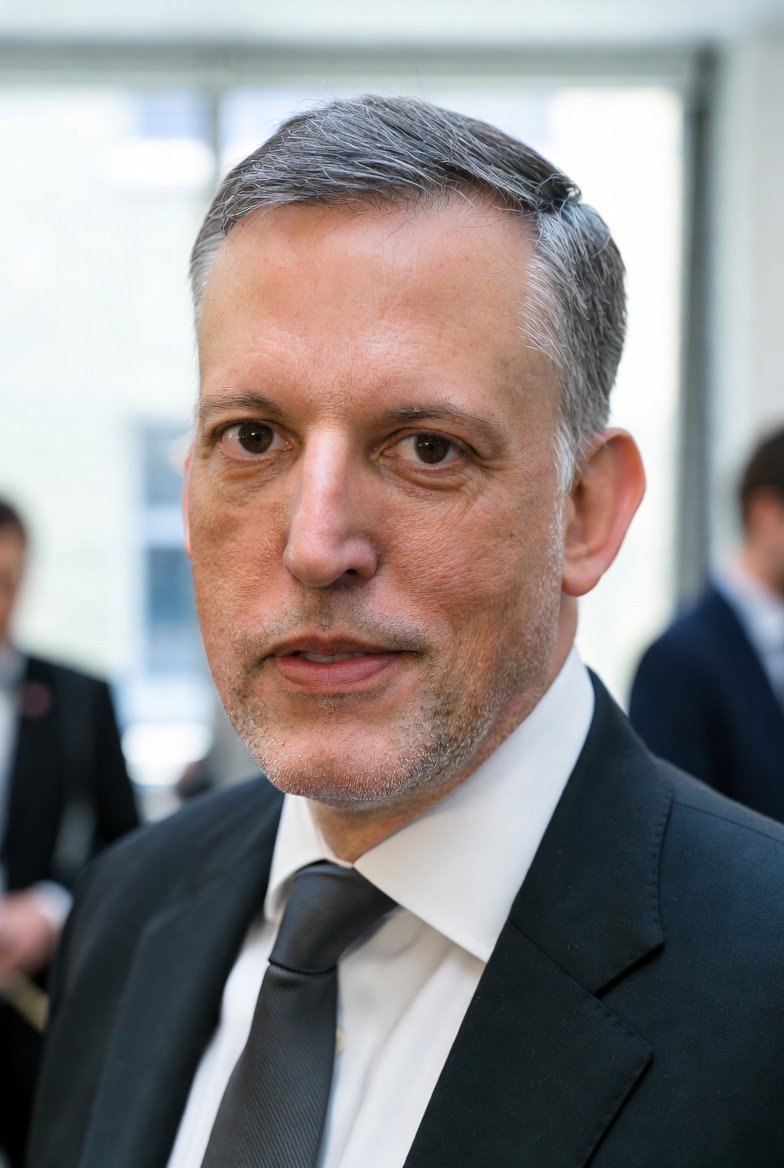
Peter Thiel Secret Society Exposed and it’s Members
In June 2026, a data breach by a Swiss hacktivist exposed the inner workings of Dialog, a long-secretive, invitation-only society co-founded in 2006 by billionaire tech investor Peter Thiel and entrepreneur Auren Hoffman. The leak revealed membership directories, attendee lists for the planned 2026 retreat, personal data on hundreds of high-profile figures, internal ranking systems, and session topics ranging from geopolitics to cult-building.
What emerged was a portrait of an elite off-the-record networking and discussion club — compared by observers to the Bilderberg Group or Bohemian Club — that brings together tech executives, politicians, military leaders, Hollywood figures, and intellectuals. The revelations immediately sparked fresh conspiracy theories portraying Thiel and his circle as a shadowy cabal with occult or malevolent ambitions.
What Is Dialog?
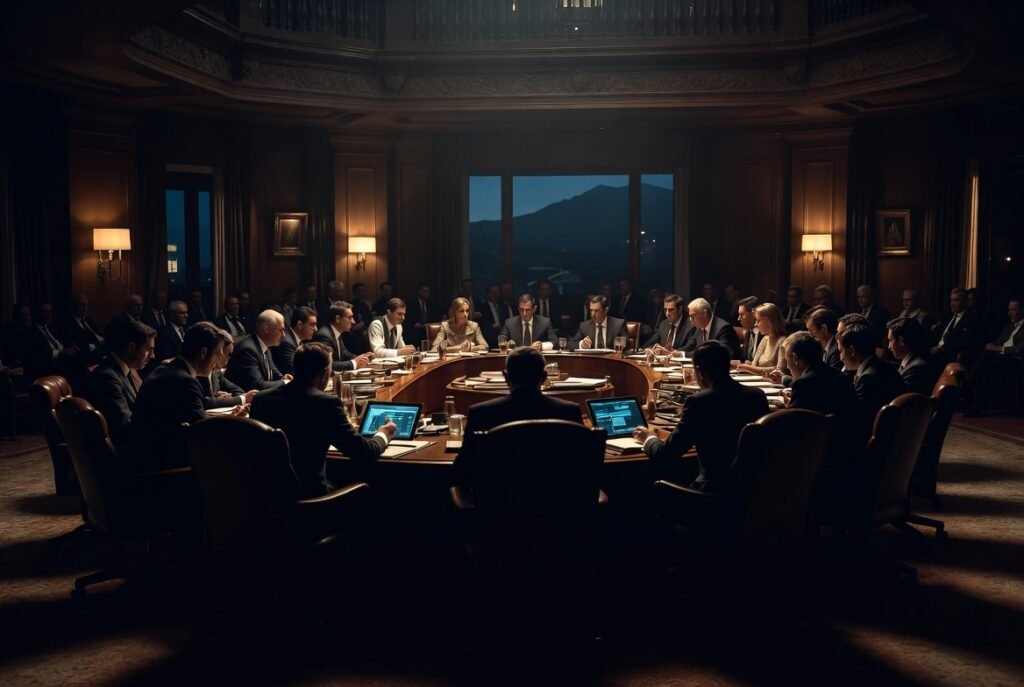
Dialog operates as a private, invitation-only organization focused on candid, off-the-record retreats (typically ~100 participants) where attendees discuss big-picture issues without attribution. Sessions emphasize concise, “nonobvious” contributions.
The group maintains almost no public footprint — its website was historically minimal — and had never disclosed a member list in two decades.
Retreats have been held at luxury venues (e.g., Ritz-Carlton Dove Mountain in Arizona, San Clemente Palace in Venice).
The 2026 event was scheduled for August 12–16 near Dublin, Ireland, with a registration fee reportedly exceeding $16,000. Dialog has also explored building a permanent campus in the Washington, D.C., suburbs to deepen engagement with policymakers. A related matchmaking platform (dating.dialog.org) exists for “meaningful connections for exceptional people.”
Internal systems reportedly include databases tracking attendance history, biographies, talents/interests, book recommendations (including Thiel’s Zero to One), future predictions (AI disruption, war, religious revival, etc.), and even a hidden ranking/grading mechanism based on wealth, fame, and relationships to optimize seating and connections.
The June 2026 Leak

Swiss hacktivist maia arson crimew (known for prior leaks like the U.S. No Fly List) first exposed a directory of ~113 names embedded in the Dialog website’s source code. WIRED independently verified it and obtained the 2026 retreat registration list naming 222 people (87 first-time attendees).
Exposed data included home addresses, phone numbers, emails, dates of birth, photos, emergency contacts, food allergies, political leanings (promised private), matchmaking preferences, and more — details participants were assured would remain confidential.
No comprehensive public “full member list” exists as a single verified document; the leaks cover a directory of affiliates plus event-specific registrants (members, guests, speakers, and past attendees overlap but are not identical). Many named individuals did not respond to media requests for comment.
Prominent Names Associated with Dialog

The lists span tech, politics (both parties, though with notable Trump administration presence), military, finance, academia, media, and entertainment. Key examples reported across outlets include:
- Tech/PayPal Mafia connections: Peter Thiel (co-founder), Elon Musk, Joe Lonsdale (Palantir co-founder), and others from the early PayPal network.
- Politics & Government: U.S. Senators Ted Cruz (R-TX) and Cory Booker (D-NJ); Rep. Jim Himes (D-CT); Treasury Secretary Scott Bessent; Army Secretary Dan Driscoll; other Trump administration figures (e.g., White House staff secretary Will Scharf); governors such as Wes Moore (MD) and Jared Polis (CO).
- Military/Intelligence: Gen. Alexus Grynkewich (NATO Supreme Allied Commander Europe / head of U.S. European Command, attendee since 2021).
- Hollywood & Entertainment: Joseph Gordon-Levitt (who publicly stated there was “a wide variety of people”); Josh Brolin; Sophia Bush; Scooter Braun; Benj Pasek; and others.
- Other notables: Nobel laureate economist Roger Myerson; ADL CEO Jonathan Greenblatt; Cato Institute president Peter Goettler; Charles Koch Foundation’s Ryan Stowers; Google DeepMind’s Tom Lue; journalists including Ezra Klein and former Washington Post correspondent Souad Mekhennet; and various data/surveillance company executives.
The mix is ideologically diverse on paper (“bipartisan” per organizers) but includes heavy representation from tech power centers and recent Republican political circles.
Session Topics and Activitie
Leaked schedules featured provocative or eclectic panels such as:
- “Navigating WWIII”
- “Battlefield Technologies”
- “Bring Back Nuclear”
- “Build-a-Cult” (moderated by the founder of the Christian networking site Pray.com)
- “Build-a-Party” (led by a former White House national security official)“How’s Your Sex Life?”
- “Money (Does?) Buy Happiness”
- Discussions on AI, disinformation, deepfakes, and societal futures.
The format prioritizes off-record candor on controversial ideas.
Update (July 2026): The planned Ireland retreat at Powerscourt Hotel Resort & Spa in County Wicklow was canceled following protests by pro-Palestinian activists over Palantir’s reported data analytics work with the Israeli Defense Forces, along with political pressure and public backlash from the leak. The hotel stated it was “relieved and pleased” the event would not proceed.
Conspiracy Theories About Peter Thiel: “Evil,” Occult, and Cabal Claims
The Dialog revelations amplified long-standing conspiracy theories portraying Thiel as a malevolent architect of dystopia, often blending his secrecy, wealth, political influence, and philosophical interests into narratives of occult or satanic control. These theories circulate across online spaces, activist protests, and some media commentary. Here are the main strands and what proponents cite:
Palantir as Dystopian Surveillance Tool (“The All-Seeing Eye”)
Palantir (co-founded by Thiel) builds data analytics platforms used by governments, militaries, ICE, and reportedly Israel. Critics call it the backbone of a surveillance state enabling mass tracking, deportations, or targeted operations. The company’s name — drawn from the Lord of the Rings palantíri (seeing stones that Sauron corrupts) — is frequently invoked as deliberate “occult” signaling of all-seeing power. Thiel’s influence in Trump circles and government contracts fuel claims he is building techno-authoritarian control.
The Antichrist Obsession and Eschatological Projection
Thiel has delivered multiple lectures (some private, some reported) on the biblical Antichrist, often through the lens of René Girard’s mimetic theory. He warns of a coming totalitarian global order via AI, climate alarmism, NGOs, or centralized power — sometimes labeling figures like Greta Thunberg as “legionnaires of the Antichrist.”
Critics (and meme-makers) argue this is projection or admission: Palantir’s surveillance tech, monopoly-friendly philosophy (Zero to One), and political kingmaking (e.g., boosting JD Vance) allegedly match the “Antichrist checklist” of deception, control, and end-times tech. Protesters have appeared at his events with satanic imagery. Thiel has dismissed the idea of the Antichrist as “some evil tech genius.”
PayPal Mafia / Dialog as Modern Illuminati or Globalist Cabal
The early PayPal team (Thiel, Musk, Reid Hoffman, etc.) is cast as a tight-knit “mafia” that seized control of tech, finance, and now politics. Dialog is portrayed as their secret society — elite retreats where regulators and the regulated mingle, agendas are set, and democracy is subverted (echoing Thiel’s past comment that “freedom and democracy are [no longer] compatible”). “Build-a-Cult” and “Build-a-Party” sessions are cited as evidence of deliberate power consolidation or social engineering. The off-record nature and powerful attendee mix are seen as proof of hidden world-shaping influence.
Transhumanist Occultism and Immortality Cult
Thiel’s investments in longevity biotech (e.g., senolytics) and early interest in parabiosis/youth-blood research are twisted into vampiric or adrenochrome-style conspiracy claims. Combined with Dialog’s esoteric-adjacent topics, Girard-influenced philosophy, and apocalyptic lectures, some portray Thiel as leading an occult or pseudo-religious project to achieve god-like control or eternal life for elites while engineering societal collapse or control for others. Fringe elements tie this to broader “Illuminati” or satanic elite tropes.
What “Supports” These Claims (Per Believers):
Thiel’s reclusiveness and privacy, Dialog’s exposed data collection and elite convergence, Palantir’s real governmental power and contracts, Thiel’s political donations and influence on figures like Vance/Trump, specific quotes and lecture topics, the “occult” literary reference in Palantir’s name, and the general pattern of wealthy tech figures operating with low transparency.
Important Context and Counterpoints:
These narratives are theories — often hyperbolic or conspiratorial interpretations of verifiable facts. Elite networking groups like Bilderberg have faced identical “secret cabal” accusations for decades without evidence of coordinated global domination or occult rituals. Thiel articulates his views openly in books, interviews, and lectures as contrarian philosophy rooted in history, economics, and theology — not hidden rites.
Palantir performs contracted data work for legitimate (if controversial) national security and law enforcement purposes; privacy and civil liberties concerns are real and debated in democratic societies, but do not equate to supernatural evil.
No credible evidence supports claims of literal occult practices, blood rituals, or a coordinated plot to end democracy or humanity. “Evil” is a moral/political judgment that varies sharply by viewpoint: supporters see Thiel as a defender of innovation, Western civilization, and truth-seeking against stagnation and ideological capture.
My Bottom Line
The Dialog leak offers a rare, data-backed glimpse into how powerful networks operate — mixing politicians with the industries they oversee, collecting sensitive personal data under privacy promises, and debating civilization-scale topics behind closed doors.
That alone raises legitimate questions about transparency, accountability, and concentrated influence in the tech-politics nexus.However, transforming these facts into sweeping claims of occult evil or grand conspiracy often reflects deeper anxieties about technological disruption, elite detachment, and eroding institutional trust more than proven secret plots.
Peter Thiel is a genuinely influential and polarizing figure whose ideas — on monopoly, stagnation, apocalypse, and power — provoke intense reactions precisely because they challenge mainstream assumptions.
The leak didn’t reveal a satanic cabal per se but it revealed an elite club doing what elite clubs have always done, now under an unflattering spotlight.
Whether that is sinister, banal, or somewhere in between depends on your priors about power, technology, and human nature.

Big John
I have an Associates & Bachelors Degree in Criminology with a minor in Political Science. I've been blogging since around 2017, my work has been viewed by 800,000 people, and I am a registered Libertarian. My work has been talked about on many of the largest news outlets in the world from Reuters, USA Today, Politifact, CheckYourFact.com, The Quint and many other outlets.
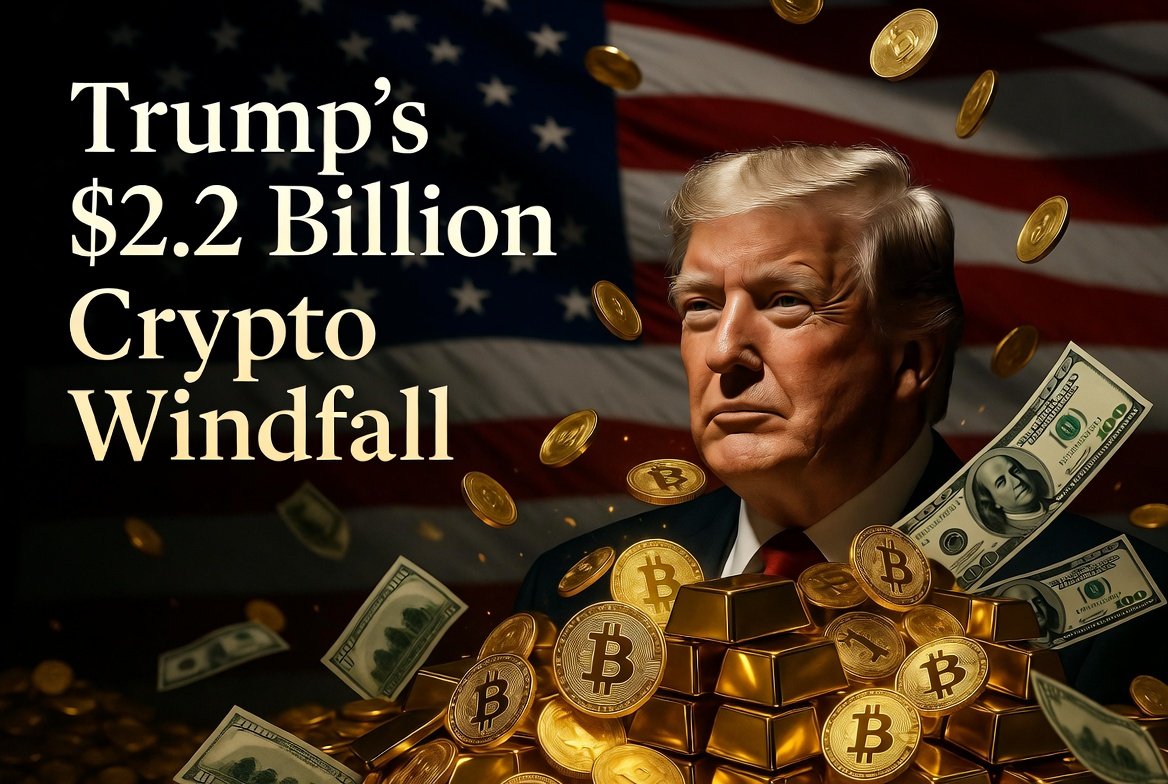


[…] has the usual suspects in an uproar. According to the 2025 report filed with the Office of Government Ethics, Trump and his businesses pulled in at least $2.2 billion in income last year — his first […]