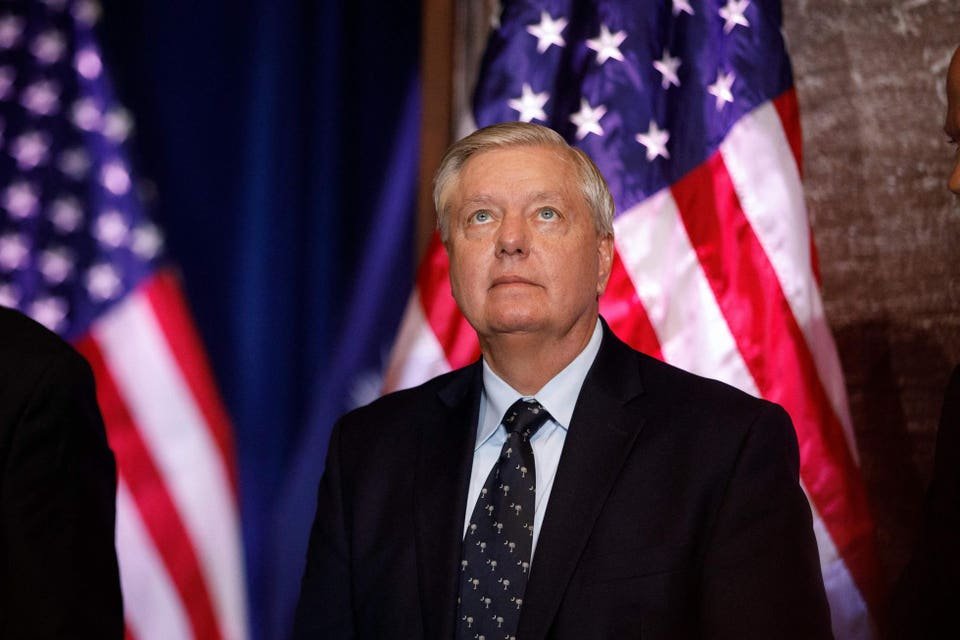
Senator Lindsey Graham Dies at 71: A Look at His Legacy, Achievements, and Criticisms
U.S. Senator Lindsey Graham (R-South Carolina), a longtime fixture in Washington and a close ally of President Donald Trump, died on Saturday evening, July 11, 2026, after a brief and sudden illness. He was 71.
His office confirmed the news early Sunday morning, stating that Graham passed away at his Capitol Hill home following cardiac arrest. He had recently returned from a trip to Ukraine, where he met with President Volodymyr Zelenskyy.
Graham served in the Senate since 2003 after eight years in the U.S. House. As a key Republican voice on foreign policy and national security, he was known for his hawkish views, strong support for Israel, and advocacy for robust U.S. engagement abroad. His death comes as he was campaigning for re-election in a state he long dominated.
Greatest Achievements as a Senator
Graham’s career was defined by his work on defense, foreign policy, and occasional bipartisan efforts:
Strong Advocate for Military Power and Alliances — Graham consistently pushed for increased defense spending and strong U.S. leadership in NATO, support for Ukraine against Russia, and robust backing of Israel. He was a vocal supporter of aid to Ukraine and sanctions on adversaries.
Key Role in Trump-Era Judicial Confirmations — As a close Trump ally, he helped shepherd through many conservative federal judges and three Supreme Court justices, shaping the judiciary for a generation.
Bipartisan Immigration Attempts — Early in his Senate career, Graham worked with Democrats like John McCain on comprehensive immigration reform bills, though they ultimately failed. He was seen as a pragmatic voice willing to cross the aisle.
Longevity and Influence in the Senate — Serving over two decades, Graham became a senior statesman on the Armed Services Committee and Judiciary Committee, influencing U.S. foreign policy across multiple administrations.
Support for Veterans and Military Families — He championed legislation benefiting veterans and active-duty personnel, drawing from his own experience as a military lawyer and Air Force Reserve officer.
Greatest Criticisms as a Senator
Graham was a polarizing figure, often criticized for shifting positions and his hawkish stance:
Perceived Flip-Flopping on Trump — Once a vocal critic of Donald Trump during the 2016 primaries (calling him a “jackass” and questioning his fitness), Graham became one of Trump’s strongest defenders and allies in the Senate. Critics called this a political calculation.
Hawkish Foreign Policy — Graham’s consistent support for military interventions (Iraq, Libya, potential action against Iran) drew fire from isolationists and libertarians who saw it as endless war-mongering and wasteful spending.
Opposition to Certain Conservative Priorities — He was criticized by some in his own party for supporting certain spending bills, immigration compromises, and not being hardline enough on issues like border security at times.
Partisanship and Gridlock — Detractors said his style contributed to Washington dysfunction, with frequent media appearances and rhetorical battles rather than quiet deal-making.
Personal Style — Graham’s folksy but combative demeanor on TV was loved by supporters but seen as performative grandstanding by critics.
Legacy
Lindsey Graham leaves behind a legacy as a committed institutionalist who believed in America’s role as a global leader. He was a fierce defender of the military and a reliable vote for conservative judicial picks. While his shifts on Trump and his aggressive foreign policy drew sharp criticism, he remained a dominant force in South Carolina politics for decades.
His sudden death is a significant loss for the Republican Party as it navigates the 2026 midterms. Graham’s influence on U.S. foreign policy will be felt for years to come.
Rest in peace, Senator.

Big John
I have an Associates & Bachelors Degree in Criminology with a minor in Political Science. I've been blogging since around 2017, my work has been viewed by 800,000 people, and I am a registered Libertarian. My work has been talked about on many of the largest news outlets in the world from Reuters, USA Today, Politifact, CheckYourFact.com, The Quint and many other outlets.


You May Also Like
President Trump Commutes Rob Blagojevich Prison Sentence
Harvey Weinstein’s Lawyer Pleads for Jurors to “Step up’ & be the ‘Last Line of Defense’