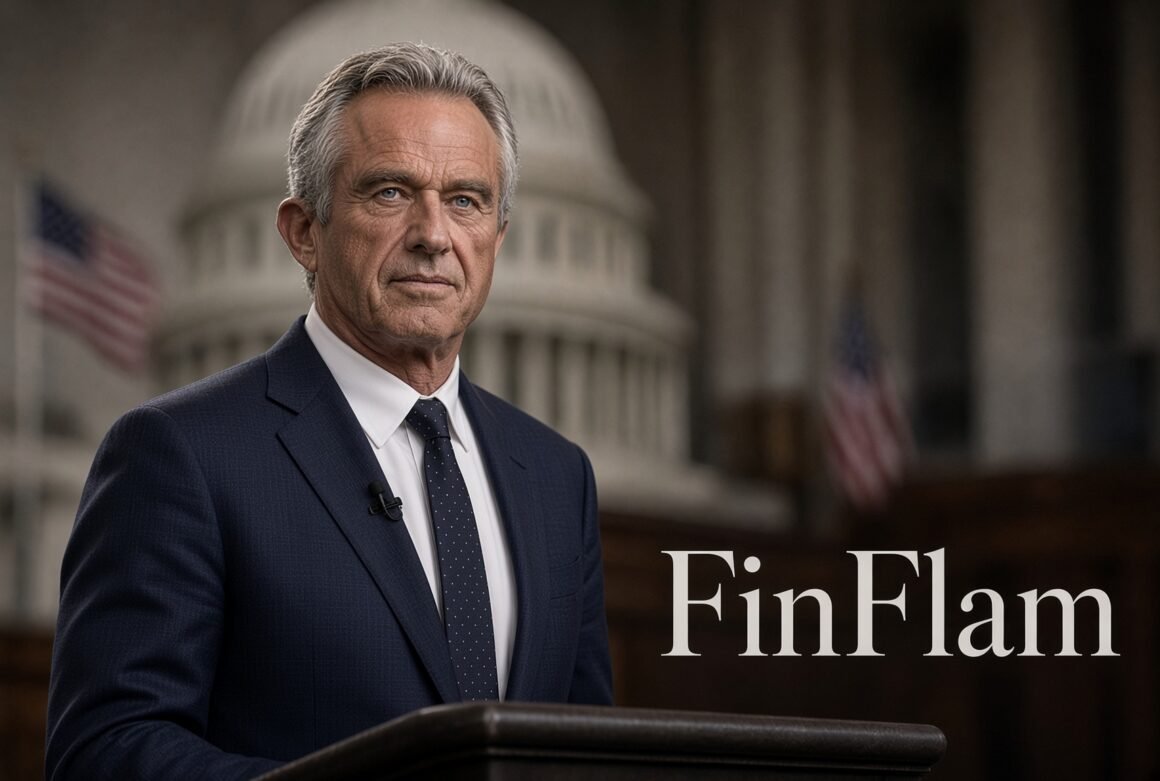
Top Democrat Launches Investigation Into Whether RFK Jr. Lied to Congress
Senate Finance Committee ranking member Ron Wyden, joined by Sen. Angela Alsobrooks, has opened an investigation into Health and Human Services Secretary Robert F. Kennedy Jr. The claim is that he lied during his January 2025 confirmation hearings about the purpose of a 2019 trip to Samoa. Wyden is expected to chair the committee once Democrats take the majority in January. The letter also demands a broad set of documents from Children’s Health Defense, the organization Kennedy previously chaired, covering the Samoa trip, his presidential campaign, his confirmation process, and communications with federal health officials since Trump took office.
The core dispute is narrow but politically useful. During confirmation, Kennedy told senators the Samoa visit had “nothing to do with vaccines.” Reporting from the Associated Press and The Guardian later published a letter Kennedy sent to the Samoan prime minister beforehand that discussed vaccines multiple times. Samoa had paused MMR vaccinations after two children died from improperly mixed doses. A measles outbreak followed months later. Democrats treat the discrepancy as evidence of a false statement to Congress. Kennedy’s defenders treat it as a semantic fight over a trip that also involved other public-health and environmental issues, and note that confirmation testimony is not always given under the same formal oath as a courtroom or full investigative hearing.
This is the opening move in a larger Democratic strategy. Multiple Democrats have already signaled plans for aggressive oversight and possible impeachment inquiries against Kennedy once they control the relevant committees. The Samoa episode is the cleanest available hook because it involves prior public statements and documents. It also lets them keep the focus on vaccines, the issue where Kennedy’s long record generates the strongest opposition from public-health institutions and the pharmaceutical sector.
Kennedy has been one of the more popular figures in the Trump administration with the base that put him there. Among MAGA Republicans his approval has run very high. Supporters of the Make America Healthy Again agenda have generally backed his focus on chronic disease, food additives, regulatory capture, and reducing the influence of pharmaceutical companies on federal policy. Early in the administration some polls showed him with relatively strong favorability compared with other senior officials. That advantage has narrowed. Recent surveys show overall job approval more mixed or underwater, and trust in health information specifically from Kennedy has declined in some polling to around one in four adults. The drop tracks broader erosion in confidence in federal health agencies and coincides with fights over vaccine policy and advisory panels.
The public is not monolithic. Large majorities still support many of the concrete goals associated with the MAHA agenda—cleaning up the food supply, questioning conflicts of interest, and addressing rising rates of chronic illness in children. Those priorities poll better than Kennedy’s personal favorability or trust numbers. The same voters who want action on those issues are often skeptical of the public-health establishment that spent years defending mandates, school closures, and messaging that later proved overstated or wrong. That residual distrust is why Kennedy retains a durable core of support even when overall numbers soften.
The relative quiet from Kennedy on some high-profile fights is not hard to explain. Running a department the size of HHS while facing constant legal challenges, internal resistance, and an incoming Democratic majority that has already telegraphed investigations requires triage. High-visibility vaccine confrontations generate headlines and lawsuits; quieter work on food standards, chronic-disease research priorities, and reducing industry influence draws less daily coverage but is harder for opponents to reverse. The silence is strategic, not a sign that the underlying agenda has been abandoned.
Whether he emerges clean from the current investigation depends on what the documents actually show and how the process is conducted. If the discrepancy on the Samoa trip is primarily a matter of emphasis or incomplete characterization rather than a material falsehood under oath, the probe is unlikely to produce criminal exposure. If it produces clear contradictions on the record, it becomes useful ammunition for hearings and potential removal efforts. Either way, the political reality is that Democrats will use every available lever once they hold the gavels. Kennedy’s ability to continue the agenda will rest more on whether the administration and the base treat the oversight as a cost of doing the job rather than a reason to retreat.
The larger issue is not a 2019 trip. It is whether the executive branch can pursue health policy that challenges entrenched interests without being tied up in process fights designed to stop the work. The numbers that matter most are not any single favorability rating. They are whether chronic disease rates, regulatory capture, and public skepticism of previous public-health guidance continue to move in the direction the administration promised. Oversight will test that, but it does not change the underlying problem the agenda was meant to address.

Big John
I have an Associates & Bachelors Degree in Criminology with a minor in Political Science. I've been blogging since around 2017, my work has been viewed by 800,000 people, and I am a registered Libertarian. My work has been talked about on many of the largest news outlets in the world from Reuters, USA Today, Politifact, CheckYourFact.com, The Quint and many other outlets.


You May Also Like

Joe Flacco Proved Yesterday Why Alex Smith Is the Ultimate Pro Quarterback

Michael Flynn’s Family Sue’s CNN for $75 Million Over QAnon Defamation
