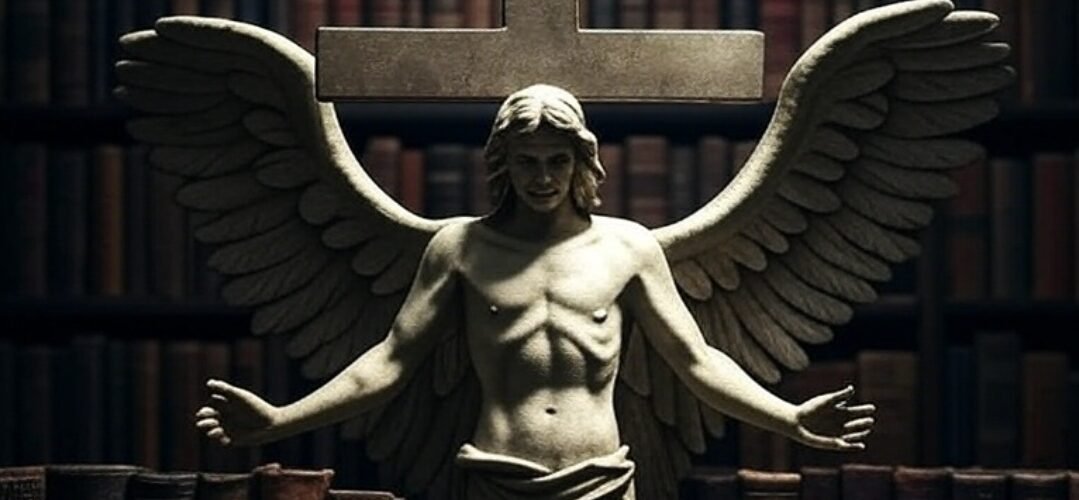
The Church of Jesus Christ of Latter-day Saints (LDS Church), commonly known as Mormonism, presents itself as a restoration of primitive Christianity. Founded in the 19th century by Joseph Smith in the United States, it claims divine revelations through new scriptures like the Book of Mormon and ongoing prophetic guidance.
However, from the viewpoint of traditional Christianity, particularly the Catholic Church, Mormonism raises significant theological concerns. The Catholic Church, with its 2,000-year history rooted in apostolic succession and the teachings of the early Church Fathers, views Mormonism not as a legitimate branch of Christianity but as a distinct religion that deviates fundamentally from core Christian doctrines.
This article explores why Mormonism is considered inauthentic and anti-Christian by Catholic standards, the official Catholic stance on its status as a Christian faith, and addresses broader comparisons to other belief systems, including Islam. The analysis is grounded in Catholic theology, historical context, and official Church documents, aiming for a balanced examination of these differences.
Historical and Theological Inauthenticity of Mormonism
Mormonism’s origins in the 1830s mark it as a modern innovation rather than a historical continuation of Christianity. Joseph Smith claimed to have translated the Book of Mormon from golden plates revealed by an angel, positioning it as “another testament of Jesus Christ” alongside the Bible. Catholics, however, see this as an unauthentic addition to the canon of Scripture, which was definitively closed at councils like Hippo (393 AD) and Carthage (397 AD).
The Catholic Church teaches that public revelation ended with the death of the last apostle, John, and no new scriptures or prophets can alter or supplement the deposit of faith (Catechism of the Catholic Church, CCC 66-67).
Theologically, Mormonism introduces doctrines that contradict established Christian orthodoxy. For instance:
- Godhead vs. Trinity: Catholicism affirms the doctrine of the Trinity—one God in three co-eternal, consubstantial Persons (Father, Son, Holy Spirit)—as defined at the Councils of Nicaea (325 AD) and Constantinople (381 AD). Mormonism, conversely, teaches a form of tritheism, where the Father, Son, and Holy Spirit are three separate gods who were once humans and progressed to divinity. This polytheistic framework is seen as a rejection of monotheism central to Judaism and Christianity.
- Nature of God and Humanity: In Mormon teaching, God the Father has a physical body and was once a man who achieved godhood, implying humans can become gods through exaltation. This anthropomorphic and evolutionary view of deity starkens from the Catholic understanding of God as eternal, immutable, and transcendent (CCC 212-213). Critics argue this resembles pagan henotheism more than biblical theism.
- Salvation and Works: While Catholicism emphasizes grace-enabled faith and works (as in James 2:24), Mormonism’s emphasis on temple ordinances, eternal marriage, and progression through degrees of glory introduces a works-based soteriology that Catholics view as Pelagian—over-relying on human effort without sufficient reliance on Christ’s atonement alone.
These elements render Mormonism inauthentic in the Catholic view because they lack continuity with the apostolic tradition preserved through the Church. The LDS Church’s reliance on 19th-century revelations, rather than the patristic consensus, is seen as a form of private revelation masquerading as public doctrine, which the Church warns against (CCC 67).
Why the Catholic Church Believes Mormonism Is Not a True Christian Religion
The Catholic Church’s position on Mormonism is clear and longstanding: it is not considered a Christian denomination but a separate religious tradition. This stance is articulated in official documents and theological assessments.
In 2001, the Vatican’s Congregation for the Doctrine of the Faith (CDF), under then-Cardinal Joseph Ratzinger (later Pope Benedict XVI), issued a response to a query about whether Mormons are Christians, stating that the LDS Church’s baptism is invalid due to defective Trinitarian theology.
The CDF explained that Mormonism’s understanding of God, Jesus Christ, and the Holy Spirit does not align with the Nicene Creed, rendering their sacramental formula illicit (CDF, “Notification on the Validity of Baptism Conferred by the Church of Jesus Christ of Latter-day Saints,” 2001).
This invalidation of baptism is pivotal because, in Catholic ecclesiology, valid baptism is the gateway to the Christian Church (CCC 1213). Without it, Mormons are not incorporated into the Body of Christ as understood by Catholicism.
Pope John Paul II’s encyclical Ut Unum Sint (1995) and the Directory for the Application of Principles and Norms on Ecumenism (1993) further outline criteria for ecumenical dialogue, emphasizing shared faith in the Trinity and Christology—criteria Mormonism fails to meet.
Catholic apologists, such as those from the Catholic Answers organization, reinforce this by noting that Mormonism’s Christ is not the eternal Son of God but a created being who advanced to godhood, akin to Lucifer in pre-mortal existence (a doctrine from Smith’s teachings).
This Christology is deemed heretical, echoing ancient errors like Arianism, which denied Christ’s full divinity. Thus, while Mormons profess belief in Jesus, the Catholic Church holds that their Jesus is a “different Jesus” (2 Corinthians 11:4), making their religion non-Christian in essence.
Comparisons to Other Faiths: Addressing Alignment with Islam
The query suggests a provocative comparison between Mormonism and “satanic works like Islam,” a phrasing that reflects strong bias but merits careful unpacking from a Catholic perspective. First, it is essential to clarify that the Catholic Church does not label Islam as “satanic.”
Official Catholic teaching acknowledges Islam as a monotheistic Abrahamic faith that worships the one God, though it rejects the Trinity and Incarnation (CCC 841; Nostra Aetate, Vatican II, 1965). The Church views Muslims with respect, noting shared beliefs in divine judgment, prayer, and almsgiving, and calls for dialogue to foster peace (Lumen Gentium, 16). Labeling Islam as satanic would contradict this irenic approach and the Church’s commitment to truth-seeking without demonization.
That said, some informal Catholic commentators draw interesting parallels between Mormonism and Islam due to structural similarities, both being seen as non-Trinitarian revelations:
- Prophetic Claims: Like Muhammad, who received the Quran as the final revelation, Joseph Smith claimed angelic visitations (e.g., Moroni) and direct divine instruction, positioning Mormonism as a “restoration” correcting corrupted Christianity. Both traditions introduce new scriptures (Book of Mormon vs. Quran) that Catholics view as superseding the Bible without apostolic authority.
- Monotheism with Nuances: Islam’s strict tawhid (absolute oneness of God) rejects any divine plurality, similar to Mormonism’s departure from Trinitarian orthodoxy, though Mormonism leans toward polytheism while Islam is uncompromisingly monotheistic.
- Practices and Exclusivity: Both emphasize rigorous moral codes, community structures, and missionary zeal. Temples in Mormonism parallel mosques in sanctity, and both have historical polygamy elements (though officially discontinued in mainstream LDS).
However, these parallels are limited and do not imply equivalence or “satanic” alignment. Catholicism critiques both as post-Christian developments that, while they claim to be revering figures like Abraham and Jesus (as a prophet in Islam), fundamentally alter core doctrines. But in actuality their Jesus is not the Jesus of the Catholic Bible.
Satan, in Catholic thought, opposes God through deception (CCC 391-395), and let’s not forget the Quran states in Surah Al-Imran 3:54 that Allah is the “best of planners,” a term often translated by critics as “best of deceivers” or “schemers,” using the Arabic word makr. While the word can mean to deceive, context suggests it refers to Allah thwarting the schemes of the wicked, such as the Jews’ plot against Jesus, by planning to counter their evil plans.
Final Take
From the Catholic perspective, Mormonism’s inauthenticity lies in its ahistorical origins and doctrinal innovations that fracture the unity of Christian faith. The Church’s determination that it is not a true Christian religion rests on irreconcilable differences in God, Christ, and sacraments, as affirmed by Vatican authorities.
For those exploring faith, consulting official Catholic sources like the Catechism or Vatican documents provides a solid foundation for discernment. Ultimately, the Church’s stance underscores the importance of orthodoxy in preserving the Gospel’s integrity against modern reinterpretations.