The Real Cost of the Venezuela Earthquake: Sanctions, Chaos, and the Human Toll
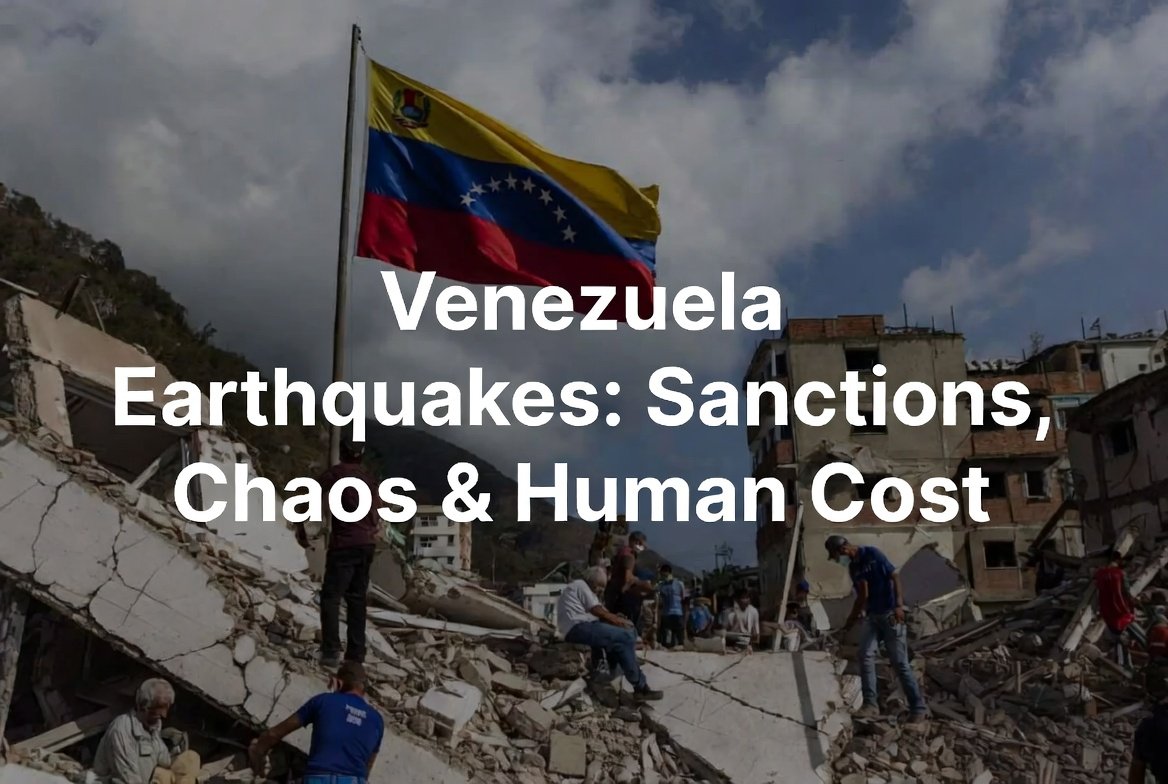
The devastating earthquakes that struck Venezuela last week have left a trail of destruction that’s getting less attention than it deserves. Thousands dead, tens of thousands still missing or displaced, and billions in damage. As a conservative libertarian who supports President Trump, I’m not here to make excuses for bad governance — Venezuela’s socialist disaster was decades in the making. But we also can’t ignore how sanctions, political chaos, and failed institutions are making the recovery far harder for ordinary Venezuelans.
The Scale of the Disaster
Back-to-back earthquakes hit a country already on its knees. Infrastructure that was crumbling under years of mismanagement collapsed. Hospitals, schools, and homes were destroyed. Humanitarian groups warn of a growing crisis — lack of clean water, medicine shortages, and the risk of disease outbreaks in the aftermath. The death toll has climbed past 2,000, but many believe the real number is much higher.
This isn’t just “bad luck.” Venezuela’s government has squandered decades of oil wealth on socialist experiments, corruption, and authoritarian control. The result? A once-prosperous nation reduced to poverty, emigration, and dependency. The earthquakes exposed how fragile the entire system has become.
Sanctions: Necessary Tool or Extra Burden?
The U.S. and other nations have maintained sanctions on the Maduro regime for years due to election fraud, human rights abuses, and ties to narco-terrorism. From a conservative perspective, holding dictators accountable is the right call. You don’t reward thugs who steal elections and crush dissent.
But here’s the libertarian reality check: Broad sanctions can punish the regime while also hurting everyday people who have the least power to change it. In a country where the government controls so much of the economy, it becomes harder to get critical supplies, reconstruction materials, and humanitarian aid through. Frozen assets and restricted trade slow down recovery when speed is essential.
Trump’s administration has a track record of tough but targeted pressure. The question now is whether a smarter approach — more focused sanctions on regime elites and their enablers, combined with direct humanitarian channels that bypass Maduro’s cronies — could save lives without weakening our leverage.
Chaos and Governance Failure
The bigger problem isn’t just sanctions — it’s the total breakdown of competent governance. Maduro’s regime was already struggling with basic services before the quakes. Corruption siphons off aid. Political repression discourages private initiative and international partnerships. When the state is both incompetent and authoritarian, disasters become catastrophes.
This is the predictable outcome of socialism: central planning that destroys incentives, crushes entrepreneurship, and leaves people dependent on a failing system. Venezuela stands as a warning — not a “what if,” but a “what happens when.”
A Better Path Forward
As libertarians and conservatives, we believe in strong borders, accountability for dictators, and free markets that lift people up. That doesn’t mean we ignore human suffering. America has always been a leader in disaster relief when it’s done right — through private charities, churches, and targeted government aid that doesn’t prop up tyrants.
Trump has the opportunity to lead here: Demand accountability from Maduro, ease restrictions where they genuinely block life-saving aid, and support Venezuelan people directly where possible. Long-term, the only real solution is political change inside Venezuela — ending the socialist experiment and restoring property rights, rule of law, and economic freedom.
The earthquakes are a tragedy. But they also highlight why good governance and free markets matter. Venezuela didn’t fail because of natural disasters — it failed because bad ideas and bad leaders destroyed the foundations of prosperity.
The human cost is real. Ignoring it while pretending sanctions are the only problem helps no one. America should lead with strength and compassion — tough on the regime, helpful to the people.
What do you think? Should we adjust sanctions for humanitarian reasons, or maintain maximum pressure? Drop your thoughts below and visit finflam.com for more straight talk.

Big John
I have an Associates & Bachelors Degree in Criminology with a minor in Political Science. I've been blogging since around 2017, my work has been viewed by 800,000 people, and I am a registered Libertarian. My work has been talked about on many of the largest news outlets in the world from Reuters, USA Today, Politifact, CheckYourFact.com, The Quint and many other outlets.
You May Also Like
Trump to award National Medal of Arts to actor Jon Voight

James Carville Fires Back at Bernie! ‘At least I’m not a F****** Communist’